

Within the space of a week, our surroundings have changed immensely. We have said goodbye to the season of Pentecost, and our long journey with the Gospel of Luke. We have passed through the Feast of Christ the King and now find ourselves at the start of a new church year, always marked by the season of Advent and here by glorious blue vestments. This Sunday we began with the Great Litany, the great catalogue of everything that could happen to us.
Advent is a time for focusing on how we need to prepare ourselves for the coming of the Christ-child, a preparation marked by honest examination of self through moments of reflection and penitence. Advent is our time of making ready and also of waiting. It is a brief season (too brief for me), to be lived as if each day will be our last. Our faith is not lugubrious, a daily dose of Angst. It is, however, a matter of deep seriousness. During this time of preparation, we look into our souls, while looking out to the vastness of the cosmos.
It is no coincidence that our lectionary drops us into the end of the Gospel of Matthew — the gospel from which we hear throughout this upcoming church year — into Jesus’ words about the end-times, the second-coming. Advent is the time of year when we focus on the end times, beyond the Incarnation, even beyond the Resurrection. The first week of Advent reminds us of the power of the Incarnation, God’s radical act of becoming flesh and dwelling among so as to bring about our salvation.
+
Matthew 24 is this evangelist’s vision of Jesus’ words concerning the last days, that is, Christ’s appearance in glory and final victory over evil. The bulk of the lesson includes two parables on the theme of preparedness (the days of Noah, and the householder), along with a number of lessons drawn from them.
The parable of the days of Noah suggests how God’s final act would catch humans unprepared. They were swept up in business as usual — eating, drinking, marrying. They were not sinful; they just did not have time in their lives for God. They were not evil per se; they just were not paying attention to what God was going to do.
Ditto for the stories of the people in pairs, describing how one is taken and one is left. In each pair two people are about the same task, but one benefits from the event and the other does not. Again, the gospel exhorts us to be alert because we do not know when the moment will come.
The householder and thief is yet another example of the same point. Like the people of Noah’s time, the householder does not know when the thief will come. Since the disciples do not know the crucial time of Christ’s coming, they must live as if any moment might be the occasion for Christ’s coming.
This message of alertness, preparedness, keeping awake and staying prepared for Christ’s imminent coming is perhaps much more difficult for us to comprehend or believe… it has been more than 2000 years, after all, since the birth of Christ, and we are still chugging along.
But, as Christ’s disciples, we are called to live in the present, with an eye to the future. We are called to live our lives prepared for the moment when we will see God face to face, a moment we do not know when will come. In our waiting, and in our preparedness, we are to live faithfully in active trust, ready to meet God in every moment.
+
Our lives are spent waiting, sometimes for something for which we have prepared hours, weeks, months or years; sometimes for a life passage over which we have absolutely no control. There are the difficult and happy periods of waiting people undergo.
Waiting… it would seem that initially in our life cycle, waiting revolves around happy events (correct me if I am totally off-base here). I have virtually no recollections of stressful, anxious waiting as a child, not even when I was facing eye surgery at age three and, a year later, at age four. The five-year old child finds the wait for Christmas Eve unbearable at times but that is a wait of happy anticipation. How many of you, as five year olds, really slept the night before Christmas?
As we get older, waiting becomes a mixed blessing. And the levels of waiting vary in their intensity. Some periods of waiting affect just ourselves, some affect those around us in our immediate circles, some affect us world-wide. Some periods will change our lives, others just nudge them.
+
Yesterday saw the culmination of a long, long period of waiting, not just for an individual but also for us as a congregation. Yesterday, as many of you witnessed, Scott was ordained to the sacred order of priests. His and our waiting, in that particular part of his journey, reached an end point.
Yesterday the Rev’d Dr Mitties DeChamplain, professor of homiletics from the General Theological Seminary, NYC, said in her sermon:
‘There are two tiny truths: first, only God can make a priest, and second, God chooses to use ordinary fragile people to work out God’s plan of salvation. This [priesthood] is a reminder of God’s presence with us.’
She spoke about seeing Scott prostrate on the floor during the litany for ordination: ‘Seeing you on the floor, going into a cruciform position, when I saw you face-down, I thought of you behind an altar in a cruciform position and how that is a sign for all of us.’ She spoke about the instrumentality that Scott becomes as a priest, an instrumentality of this crucified and risen Christ for all the rest of us.
She then charged him with these words: ‘Let your body be filled with love for people and love for God.’
Then, with the laying on of hands by our bishop and all gathered priests there, Scott himself became a priest, ending a long quest.
But we also know Advent is a time of new beginnings. It is even more so today for Scott and for us. Today he receives a message of God speed. We tend to think of ordinations as the culmination of a journey and, in a sense, they are, but they are also a beginning. I remember hearing a bishop whisper that to a classmate of mine minutes after he ordained her to the priesthood: ‘You are just beginning.’ So Scott goes to his new parish, his new life as rector at Saint James’. The one piece of advice I can give him is: ‘Love the people of Saint James as you have loved us and they will love you back.’
In turn, for those of us gathered here this morning, we must let go of Scott and say God speed and God bless. Friendships will endure but our relationship will be different from here on. We have been blessed as his sponsoring parish to witness his presiding for the first time at the Holy Eucharist — always a transformative moment for both new priest and congregation — and that has been a gift from God.
+
This Advent, then, is marked with even more new beginnings than usual.
Even as we mark this new beginning, we also wait… wait for resolution in those unresolved parts of our lives, wait for peace in this fragile world, wait for healing for those who need it, wait for answers to our questions… we wait… and most of all, we wait for the Christ Child, Immanuel.
Advent is a time of strengthening hope, a period of preparation for Christmas, but also a time to connect our lives with history and with God, the God of hope and promise. For it is in our flesh that God comes to meet us.
So come, all of us wherever we will be this Advent, with faith and trust, to celebrate this Season of Anticipation.
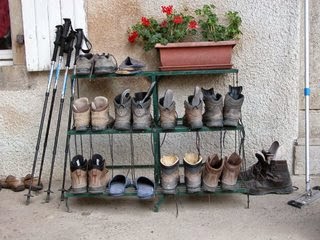
[photo: how we might look tomorrow if the snow storm materialises]







No comments:
Post a Comment